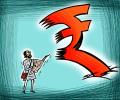
For first time in 8 yrs, stake sale proceeds could exceed Budget Estimates. ONGC's acquisition of HPCL alone could get the exchequer more than Rs 30,000 crore.

For the baning sector, 2018 was a 'Year of Exits' - borrowers fled from the country as loans went kaput and many bank CEOs were forced to leave

Fresh buying by domestic institutional investors and better-than-expected June quarter results from some blue-chip companies boosted investor sentiment

Measured by returns in 2013, the top 10 funds had only three from large houses; nimble strategy could be a factor.

India's equity markets are on a roller-coaster ride, after delivering spectacular returns for two consecutive years - in 2020 and 2021. The benchmark National Stock Exchange's (NSE's) Nifty50 is down 1.5 per cent in the first nine months of the current calendar year 2022 (CY22) as foreign portfolio investors sold Indian stocks due to rising bond yields in the US and across global markets, including India. The sell-off in the Indian equity markets has, however, not been broad-based and largely limited to sectors facing earnings headwinds from rising interest rates, lower commodity and energy prices, and likely economic recession in advanced economies.

Overseas investors, as well as other key stakeholders, such as brokers, custodians, and clearing corporations, are yet to iron out critical issues, even as the shift towards a shorter trade settlement cycle approaches new phases. Several industry players said foreign portfolio investors (FPIs) are still facing impediments over the trade confirmation timelines, foreign exchange (forex) bookings, and pre-funding requirements. This could potentially act as a roadblock when it comes to moving entirely to the new T+1 settlement cycle from next year.

'Start-ups that generate a majority of their income in India are likely to opt for an Indian listing.'

Is the worst over for Indian banks? The past two years saw them ride on treasury trades as deposits soared and credit growth dipped sharply. Gross and net non-performing assets (NPAs) moved south, and the provision coverage ratio (PCR), capital buffers, and profitability indicators are back at pre-pandemic levels. So, what's the plot ahead?

Select companies in infra, capital goods, private banks, auto, oil & gas, and mining could be considered by investors.

ICICI Bank, HDFC Bank, Infosys, SBI and L&T among fund managers' preferred bets.
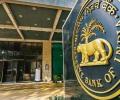
The Reserve Bank on Monday superseded the boards of Srei Infrastructure Finance as well as Srei Equipment Finance, citing concerns over governance and payment defaults, and decided to refer the two NBFCs for resolution under the insolvency law. This is only the second time in as many years that the Reserve Bank of India (RBI) is referring entities for the resolution process under the Insolvency and Bankruptcy Code (IBC) after taking first ever such step in the case of DHFL back in 2019. Superseding the boards of the crisis-hit Srei Infrastructure Finance Limited (SIFL) and Srei Equipment Finance Limited (SEFL), the RBI has appointed Rajneesh Sharma, former Chief General Manager of Bank of Baroda as the administrator to manage the affairs of the two companies.

Multi-cap funds are best suited to exploit the present market scenario as they are free to invest across all market capitalisations and sectors, says Naveen Kukreja, CEO and co-founder, Paisabazaar.com.

Stocks such as ICICI Bank, Axis Bank, State Bank of India, Bank of Baroda and HDFC Bank are among the top banking picks of analysts for 2017. A decline in cost of funds and treasury gains are expected to help stabilise their net interest margins

Retail investors may safely invest in shorter-duration funds, suggests Sanjay Kumar Singh.
The previous highest divestment proceeds for the first half of a year was around Rs 21,000 crore in 2016-17.

Lenders can now initiate recovery proceedings since the SC has lifted the standstill on asset classification, which protected stressed accounts from slipping into NPAs.

Polarisation and the increase in index weight of a few a stocks have weighed on performance. The worst performers include Nippon India Large Cap and HDFC Top 100 (2.6 per cent).

Top gainers in the Sensex pack were TCS, Bharti Airtel, Infosys, Axis Bank, L&T, ITC, PowerGrid, HCL Tech and Tata Steel, ending up to 2.39 per cent.

Strategy being reworked to launch ETFs, revive Suuti; proceeds may be Rs 24k crore

Ajit Mishra, vice president, Research, Religare Broking, answers your queries
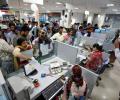
While law-abiding customers are harassed for KYC and have to comply with endless paperwork even to open and close accounts, DHFL could easily open nearly 260,000 fake home-loan accounts, reveals Debashis Basu.

Kapoor was among the founding team of Yes Bank, along with Ashok Kapur who died in 2008.
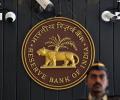
The Reserve Bank of India (RBI) is precariously balancing two opposing objectives - maintaining easy financial condition in the domestic market, while ensuring external stability - and economists have started taking note. They say India is going through the classic trilemma of the 'Impossible Trinity'. The RBI cannot have an independent monetary policy (setting domestic interest rates) in an environment of an open capital account and flexible exchange rates. What is even more complicated for the central bank now is that financial market stability overlays all the other three objectives.

Gilt funds make sense only if you want to take a tactical view on interest rates and are looking for a short-term duration.

Major global indices like CAC 40, DAX Shanghai Composite, Hang Seng, Nikkei, Straits Times, Sensex, Nifty have lost 1% - 10% in a week

Retail investors have gained significant heft in the past year amid a sustained uptick in Indian equities. The share of retail investors in companies listed on the NSE reached an all-time high of 7.32 per cent in the quarter ended December 31, 2021, up from 7.13 per cent in the previous quarter and 6.9 per cent a year ago, the data from PRIME Infobase shows. This was despite the Nifty's 1.5 per cent decline during the quarter.

Sun Pharma was the biggest gainer in the Sensex pack, advancing 1.79 per cent.

The BSE Midcap and the Small-cap Index have run up 25.3 per cent and 31.3 per cent respectively over the past year. Valuations are no longer cheap, notes Sanjay Kumar Singh.

Generally, the central bank grants its approval by mid-March, or latest by March 31, but most banks have not received RBI approval on bonus packages this year.
'It is critical that the Covid curve does not have a fat tail and the chain is broken quickly.'

Foreign banks set the template in consumer banking in its infancy, but have almost vacated this booming space.

Equity benchmark Sensex tumbled 674 points on Friday, weighed by losses in banking stocks as an unabated spike in new coronavirus cases fuelled uncertainty over the economic impact of the pandemic. After hitting a low of 27,500.79 during the day, the 30-share BSE barometer ended 674.36 points or 2.39 per cent lower at 27,590.95. The NSE Nifty shed 170 points, or 2.06 per cent, to finish at 8,083.80.

'The book captures Rana Kapoor's hunger for real estate leading to bungalows in Delhi, Mumbai, London and other cities; the multiple companies -- over 100 -- to fund his family's various ventures; the attempt to game the system by showing lower non-performing assets,' notes Joydeep Ghosh.

Investors who issued units in liquid and overnight funds, as well as those with a short-term holding of less than 30 days, are likely to be impacted the most, say experts.

The RBI has cited corporate governance and regulatory issues for not extending Kapoor's term. Further, the lender has been directed to search for a successor.

Cheque payments will be safer; the limit for contactless card transactions hiked.

Yes Bank was the biggest gainer in the Sensex pack, rallying 11.48 per cent amid reports that private equity firms have showed interest in buying a major stake in the private sector lender.

Ajit Mishra, vice president, research, Religare Broking, answers your queries.

'We still need a certain number of large public sector banks for financial inclusion and stability purposes.'

For non-banks, the IL&FS crisis was nothing short of India's Lehman moment, which has for a foreseeable future reset the sector on multiple grounds.
